

Does your office feel comfortable in the morning but become hot and glaring by mid-afternoon? Large windows may give your New Port Richey business excellent natural light, but they can also allow significant solar heat into the building.
Commercial window film can help control that heat, reduce glare, and create a more consistent indoor environment—without replacing otherwise functional windows.
Why Some Areas Become Hotter Than Others
Sunlight enters a commercial building through its glass and warms floors, furniture, walls, and other surfaces. Those surfaces release heat into the room, making the air-conditioning system work harder to maintain the thermostat setting.
Building orientation plays an important role. East-facing windows receive direct morning sun, while west-facing glass often creates the strongest afternoon heat. South-facing windows can receive prolonged sun throughout much of the day.
That is why a conference room, reception area, dining space, or row of offices may feel much warmer than the rest of the building.
How Commercial Window Film Helps
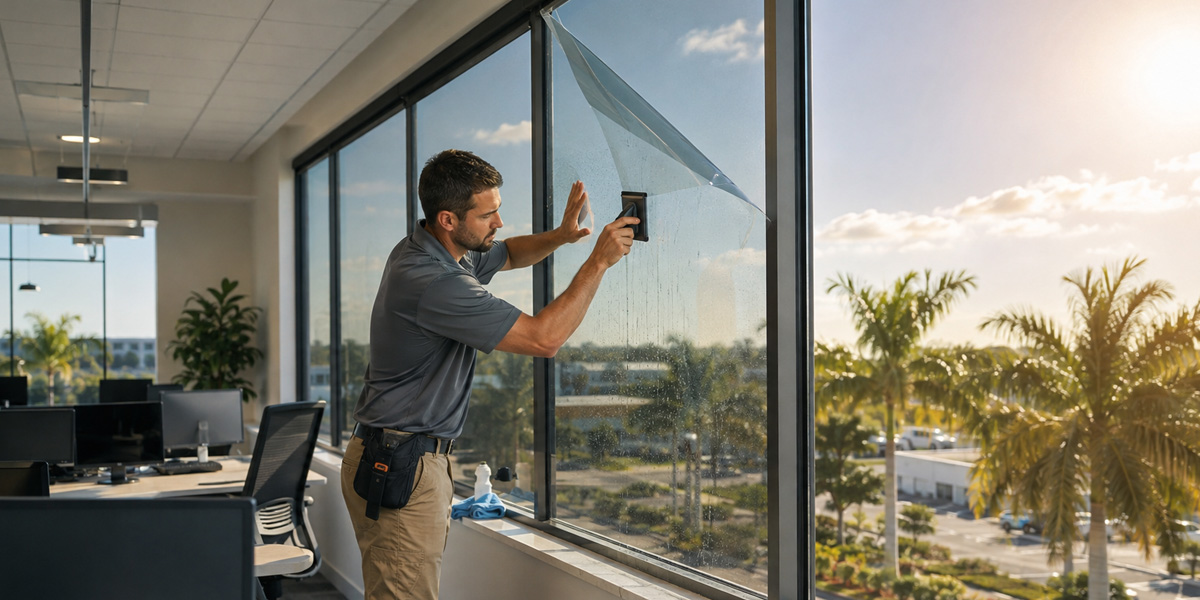
Solar-control film is installed directly on existing commercial glass. It is designed to manage the solar energy entering the building while preserving useful natural light and outdoor visibility.
Depending on the selected product, professional commercial window tinting can help:
- Reduce solar heat entering through the glass
- Control bright glare on computers and displays
- Filter ultraviolet radiation that contributes to fading
- Improve daytime privacy
- Create a more uniform exterior appearance
- Reduce hot and cold spots near windows
ENERGY STAR recommends assessing solar film and other window coverings on east-, west-, and south-facing commercial glass to reduce solar heat gain. Its commercial-building efficiency guide identifies window treatments as a potential building-envelope improvement.
Will Window Film Make an Office Too Dark?
Commercial film does not need to look dark or mirrored. Today’s products are available in different shades, colors, reflectivity levels, and visible-light transmissions.
A lightly tinted or spectrally selective film may reduce unwanted heat while allowing substantial daylight into the room. Reflective films can provide greater glare control and daytime privacy when those are priorities.
The National Fenestration Rating Council independently evaluates window-film energy performance. Comparing ratings such as solar heat gain coefficient and visible transmittance helps building owners understand how a product manages heat and daylight.
Window Film Versus Blinds or Replacement Windows
Blinds can reduce visible brightness, but solar energy may have already passed through the glass before reaching them. Employees must also open and close blinds throughout the day, often leaving rooms unusually dark.
Replacement windows may improve overall building performance, but they require a much larger construction project. Film can be a practical option when the existing windows and frames remain in serviceable condition.
The right solution depends on the building, glass, budget, and performance goals. Window film should never be selected without confirming that it is compatible with the existing glass.
Glare Matters Too
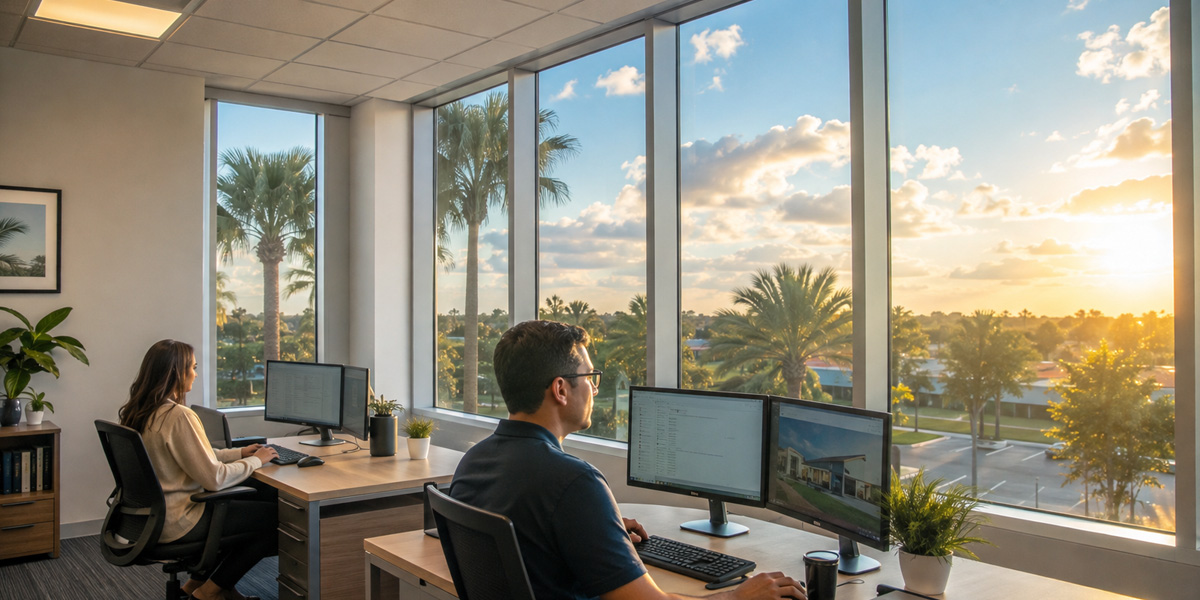
Direct sunlight reflected on computer screens can make text difficult to read and contribute to eye strain. OSHA’s workstation guidance recommends controlling window glare through positioning and appropriate window treatments.
Commercial film provides consistent glare control without requiring employees to adjust blinds whenever the sun moves.
Plan Installation Around Your Business
Professional installation can often be completed in sections to limit interruptions. Offices, storefronts, restaurants, medical practices, churches, and multi-tenant properties can schedule work around operating hours and customer traffic.
SOL Control Customs & Tint brings more than 28 years of local experience to commercial film projects. Businesses in New Port Richey, Trinity, Port Richey, Holiday, Hudson, and surrounding Pasco County communities can explore SOL Control’s window-film services and installation experience.
Ready to address afternoon heat or glare? Contact SOL Control to schedule an onsite assessment.
Frequently Asked Questions
Can window film lower a commercial building’s cooling costs?
Solar-control film can reduce the heat entering through glass, which may lower cooling demand. Actual savings depend on window area, building orientation, film performance, HVAC efficiency, operating hours, and energy rates. A building-specific assessment provides a more realistic expectation.
Is commercial window tint suitable for storefronts?
Yes. Commercial film can reduce heat, glare, UV exposure, and daytime visibility into selected areas. Clear or lightly tinted products can preserve merchandise visibility, while decorative or privacy films may be used in offices, treatment rooms, and employee spaces.
Can window film be applied to every type of glass?
Not every film is compatible with every window. Glass type, pane thickness, coatings, age, condition, and exposure must be evaluated before installation. Using an unsuitable product may increase thermal stress, so professional film selection is important.
How long does commercial window-film installation take?
Timing depends on the number and size of windows, access, furniture placement, and film selected. Smaller offices may require only a short installation window, while larger buildings can be completed in planned sections to minimize disruption.